


What Is the Average Rain Gutter Install Cost in 2026?
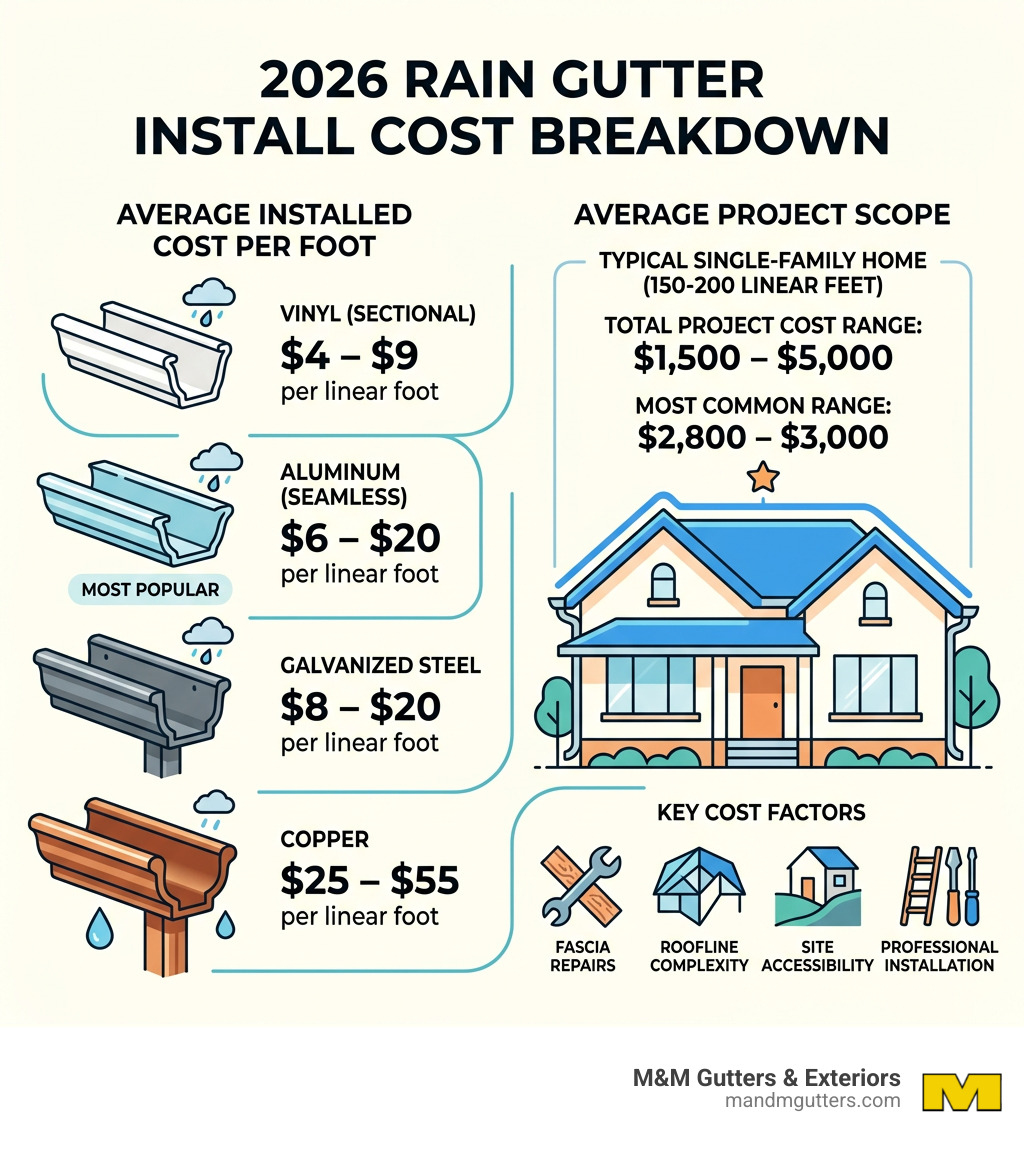
In 2026, the average rain gutter install cost ranges between $1,500 and $5,000 for a typical single-family home (150 to 200 linear feet), with most homeowners spending roughly $2,800 to $3,000 for professional installation.
On a per-foot basis, installed costs vary significantly by material:
- Vinyl (Sectional): $4 – $9 per linear foot
- Aluminum (Seamless): $6 – $20 per linear foot (the standard choice for most homes)
- Galvanized Steel: $8 – $20 per linear foot
- Copper: $25 – $55 per linear foot
Your final project price depends on home size, roofline complexity, gutter profile, and whether you need rotted fascia wood repaired before installation.
A dependable gutter system isn’t just an exterior detail—it is your home’s primary defense against expensive basement flooding, siding decay, and foundation erosion.
I’m Nathan Nuttall with M&M Gutters & Exteriors, where our team has helped Utah homeowners evaluate real-world rain gutter install cost options and exterior solutions for over 30 years. Below, we will break down the exact numbers, hidden fees, and material comparisons so you can budget your upgrade with complete confidence.
Rain gutter install cost definitions:
Understanding Your Total Rain Gutter Install Cost
When planning your exterior remodel, understanding how contractors arrive at your estimate prevents surprise expenses. The total price is not just the metal hung along your roofline; it represents a combination of raw materials, fabrication, skilled labor, job supplies, and safe disposal.
Nationwide, full replacement packages range from $1,000 for basic single-story layouts up to $10,000+ for large estates featuring custom metalwork. Labor generally makes up 30% to 50% of the bill, covering layout design, proper slope calibration, and secure attachment to the fascia board.
Here is how overall project tiers generally compare based on typical home sizes:
| Home Size (Sq. Ft.) | Approximate Linear Footage | Standard Seamless Aluminum ($8–$15/LF) | Premium Steel or Zinc ($12–$25/LF) | Architectural Copper ($25–$55/LF) |
|---|---|---|---|---|
| Small (1,000–1,400) | 100–130 LF | $800 – $1,950 | $1,200 – $3,250 | $2,500 – $7,150 |
| Medium (1,500–2,200) | 140–180 LF | $1,120 – $2,700 | $1,680 – $4,500 | $3,500 – $9,900 |
| Large (2,400–3,200) | 190–240 LF | $1,520 – $3,600 | $2,280 – $6,000 | $4,750 – $13,200 |
| Estate (3,500+) | 250–350+ LF | $2,000 – $5,250+ | $3,000 – $8,750+ | $6,250 – $19,250+ |
Average Project Totals and Linear Foot Rates
For an accurate budget, you need to understand both linear foot rates and total system runs. When reviewing estimates, you can reference our guide on calculating your typical gutter expenses to see how different profiles and hardware packages scale on real-world homes.
A standard installation includes the horizontal gutter troughs along the eaves, vertical downspouts to channel runoff to ground level, hidden internal hangers spaced every 24 to 32 inches, end caps, and heavy-duty sealant at corner miters. If you are comparing proposals, make sure each bid specifies whether downspout footage and hardware are billed separately or rolled into the overall price per foot.
Calculating Linear Footage and Downspout Needs
Calculating how much material you need is straightforward. You measure the length of every roof edge that sheds water—the eaves—rather than measuring along the slope of the roof.
To help plan your material requirements:
- Measure total horizontal eave length.
- Calculate downspout drops: allow one downspout for every 30 to 40 linear feet of gutter run to prevent overflowing during heavy downpours.
- Account for vertical drops: add 10 to 12 feet of downspout per story on each corner drop.
- Plan the slope: gutters must drop at least 1/4 inch for every 10 feet toward the downspout to ensure positive drainage.
If you want to test various scenarios before speaking with a professional, using an online Gutter Installation Cost Calculator (2026) | Per Foot is an easy way to verify your measurements against real material costs.
Gutter Material and Style Options
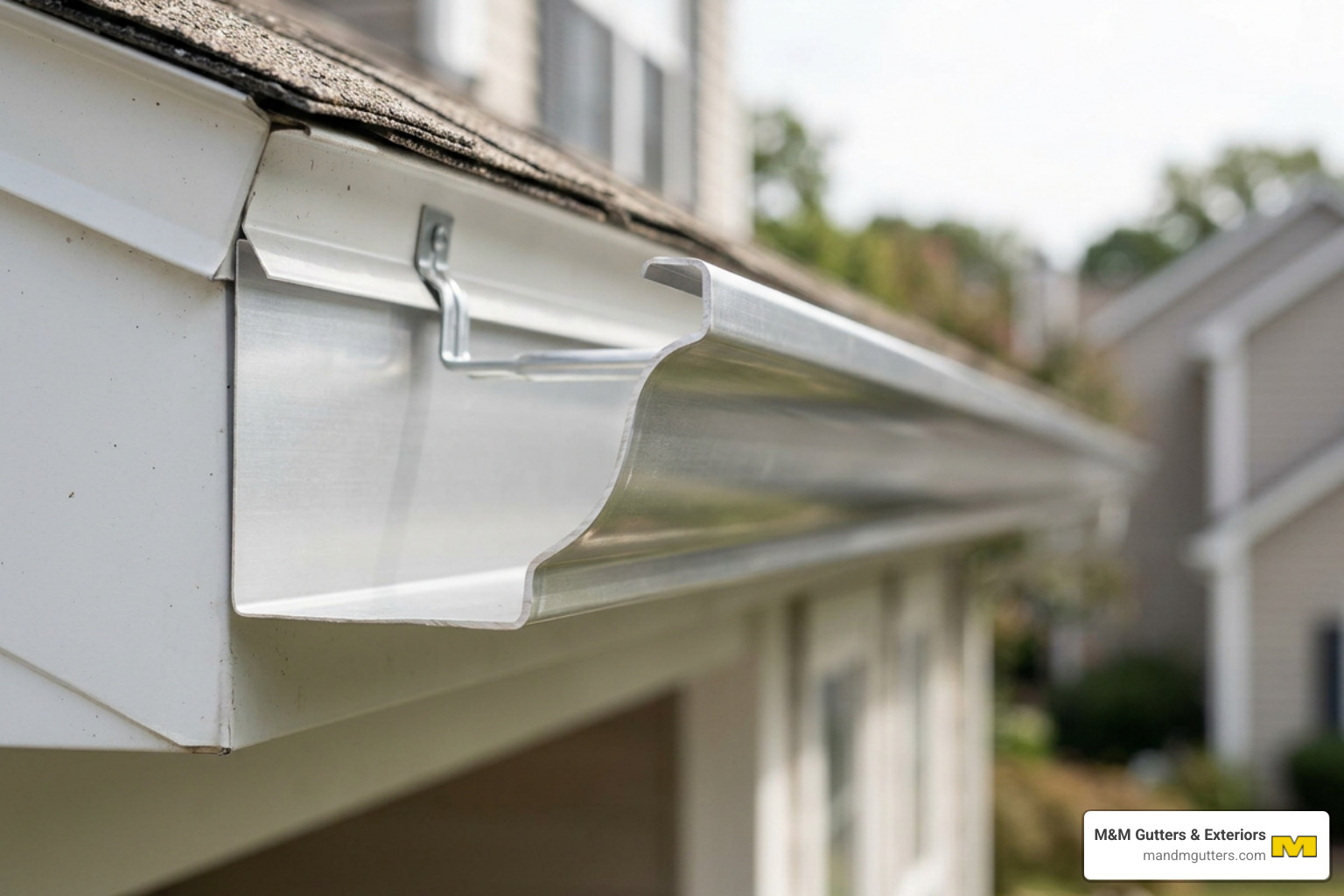
Your choice of material and architectural profile directly dictates curb appeal, structural resilience, and long-term maintenance costs.
The two main gutter styles are:
- K-Style Gutters: Featuring a decorative crown-molding shape on the outer face, K-style gutters are the most popular choice across the United States. Their flat back rests flush against the fascia, and their deep profile holds significantly more water than traditional curved styles.
- Half-Round Gutters: Built with a smooth, semi-circular trough, half-round systems are common on historic and European-style homes. While they shed debris efficiently and offer timeless aesthetics, they require specialized external mounting brackets and hold roughly 30% less water volume than equivalent K-style systems, which often pushes costs 30% to 50% higher.
Estimating Rain Gutter Install Cost by Material
Material choice accounts for the largest price spread in any installation project. You can explore our in-depth walkthrough on estimating your rain gutter installation cost to match your regional climate with the right metal.
Here is how the top materials compare:
- Vinyl ($4 – $9 per linear foot installed): The most budget-friendly option. Vinyl is lightweight, rust-proof, and snap-together friendly. However, it becomes brittle under freezing winter temperatures and intense UV exposure, often cracking within 10 to 15 years.
- Aluminum ($6 – $20 per linear foot installed): The industry standard for over 70% of homes. Aluminum is naturally rust-proof, lightweight, and comes in heavy 0.032-inch gauges that withstand heavy snow and rain. It is available in dozens of baked-on factory colors and typically lasts 20 to 30 years.
- Galvanized Steel ($8 – $20 per linear foot installed): Exceptional strength against severe weather, falling branches, and heavy snow loads. However, if the protective zinc coating is scratched or wears away, steel will rust over time, giving it an expected lifespan of 15 to 20 years without diligent maintenance.
- Zinc ($15 – $30 per linear foot installed): A premium architectural metal that develops a protective gray patina over time. It self-heals minor scratches and resists corrosion for 50 to 80 years.
- Architectural Copper ($25 – $55 per linear foot installed): The gold standard of luxury exteriors. Copper never rusts, requires no paint, and gradually patinas into a distinctive verdigris finish. With proper installation, copper lasts 50 to 100+ years.
Seamless vs Sectional Gutter Systems
The structural construction of your gutters matters just as much as the metal alloy you choose.
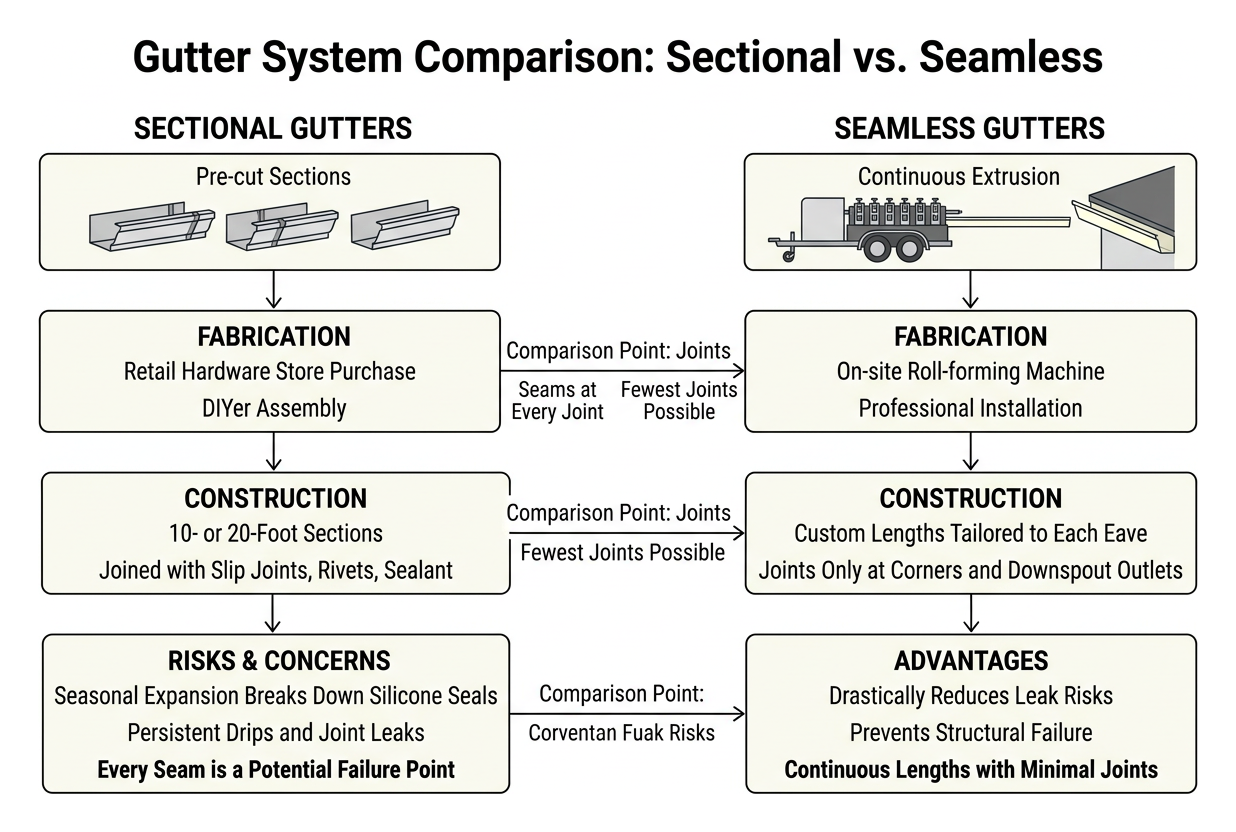
- Sectional Gutters: Built using pre-cut 10- or 20-foot sections joined together with slip joints, rivets, and sealant. While sectional systems are readily available at retail hardware stores for DIYers, every seam is a potential failure point. Over time, seasonal expansion and contraction break down silicone seals, leading to persistent drips and joint leaks.
- Seamless Gutters: Formed on-site using a specialized roll-forming machine mounted in a work trailer. The metal is extruded into continuous lengths tailored exactly to each eave of your roof. Because seamless systems only have joints at corners and downspout outlets, they drastically reduce leak risks and structural failure. You can learn more about how our custom lengths are fabricated by reviewing our seamless gutter installation process.
Key Factors Affecting Your Installation Estimate

No two homes are identical, which is why gutter estimates require a custom assessment. Several structural factors push labor and material requirements up or down:
- Stories and Building Height: Single-story ranch homes are fast and straightforward to service. Multi-story homes require tall staging, specialized ladder stabilizers, safety harnesses, and additional crew members, which typically adds $1 to $4 per linear foot in labor.
- Roof Pitch and Architecture: Steep-slope roofs (such as 8/12 or 12/12 pitches) cause water to cascade down much faster during heavy downpours. These homes require larger 6-inch gutters instead of standard 5-inch profiles to prevent water from overshooting the trough.
- Access and Landscaping Obstacles: Dense perimeter landscaping, steep yard grading, narrow side yards, or glass solariums increase setup time and safety precautions for installation crews.
Hidden Costs: Fascia Repairs and Old Gutter Removal
When budgeting for your project, do not overlook what lies underneath your existing gutters. The wooden fascia board along your roofline provides the structural anchor for the gutter hangers.
If old, overflowing gutters have been spilling water behind the metal for years, the fascia wood may be rotten. Hanging new gutters on compromised wood will cause screws to pull free under heavy rain or winter snow loads.
Fascia replacement typically costs $5 to $15 per linear foot for materials and labor. Inspecting your eaves early is crucial; review our checklist on recognizing signs your home needs new gutters to spot early structural warnings. Additionally, standard removal and environmentally responsible disposal of your old gutter system generally costs $1 to $2 per linear foot.
Add-Ons: Gutter Guards, Heat Tape, and Downspouts
Complementary accessories protect your investment and optimize water management:
- Gutter Guards ($4 – $15 per linear foot installed): Micro-mesh screens prevent pine needles, leaves, and debris from clogging downspouts, reducing the need for dangerous ladder climbs and bi-annual cleanings.
- Self-Regulating Heat Cables ($12 – $25 per foot installed): Ideal for northern climates prone to heavy snow and ice dams. Heat tape keeps the bottom of the gutter and downspout clear of freezing meltwater.
- Underground Downspout Extensions ($15 – $30 per foot): Burying solid drainage pipe to carry runoff 10 to 20 feet away from the foundation protects basements and foundation footings.
If you are bundling multiple exterior upgrades, such as gutters, siding, and roofing, exploring flexible exterior project financing can help keep monthly investments manageable.
DIY vs. Hiring a Licensed Contractor
It is tempting to look at sectional gutters at the home improvement store and consider a weekend DIY project. However, weighing upfront savings against long-term performance and personal safety is essential.
DIY vs Professional Rain Gutter Install Cost
DIY installation requires specialized tools: ladder standoffs, tin snips, hex drivers, pop rivet guns, sealant, and safety gear. Material waste from incorrect miter cuts can quickly eat into your savings.
On a standard 150-linear-foot single-story home, DIY sectional vinyl might cost $400 to $700 in retail materials, while professional seamless aluminum runs roughly $1,500 to $2,500.
The professional premium buys custom continuous extrusions with zero mid-run seams, laser-verified drainage slope, structural warranties, and complete elimination of personal ladder risk. When evaluating local teams, check out our buyer’s guide to top gutter contractors in Salt Lake City to learn what certifications, insurance credentials, and reviews to look for.
Regional Cost Differences and Market Benchmarks
Gutter installation pricing varies across the country based on local cost of living, regional labor wages, snow load requirements, and material availability.
According to data comparing Average Gutter Cost by State in 2026 (All 50 States Compared) | UseCalcPro, labor and material rates shift significantly by region:
- Mountain West & Northern Utah (Salt Lake County, Summit County, Davis County): High snow loads require heavy-gauge aluminum (0.032 inches) and closer hanger spacing (18 to 24 inches), with average complete installations ranging from $2,400 to $3,800.
- Southern States: Milder winters allow for lighter-gauge metals and wider bracket spacing, with average projects landing between $1,800 and $2,900.
- Pacific Northwest & Northeast: High rainfall intensity and dense tree cover push demand for larger 6-inch seamless systems and micro-mesh filtration, averaging $3,000 to $4,600.
Frequently Asked Questions About Gutter Installation
How much linear footage of gutters does an average home require?
Most single-family suburban homes require between 100 and 250 linear feet of gutters. A standard single-story ranch home typically needs 120 to 150 linear feet, while a multi-story home with complex roof valleys, dormers, and attached garages often requires 180 to 250+ linear feet.
How long do seamless aluminum gutters last compared to copper?
Seamless aluminum gutters typically last 20 to 30 years when properly maintained and cleaned twice a year. Architectural copper gutters, by comparison, can last 50 to 100+ years. Copper naturally forms a protective patina coating that shields the base metal from environmental degradation and corrosion indefinitely.
Are gutter guards worth the extra upfront investment?
Yes, especially if your roofline sits near mature trees like pine, oak, or maple. High-quality micro-mesh gutter guards reduce gutter cleaning frequency by up to 80% and prevent downspout clogs that cause water to back up under your shingles. With professional gutter cleanings costing $150 to $300 per visit, a quality guard system can pay for itself within 4 to 6 years while keeping you off dangerous ladders.
Conclusion
Investing in a well-designed gutter system is one of the most cost-effective ways to protect your home’s foundation, basement, and siding from expensive water damage. Whether you are replacing an aging, leaky system or installing custom-extruded gutters on a new home, understanding material choices, installation factors, and hidden fascia requirements guarantees you get the best value for your budget.
At M&M Gutters & Exteriors, our team brings over 30 years of exterior remodeling experience to every home across Salt Lake City, Utah County, Summit County, Davis County, Weber County, and Northern Utah. We combine heavy-gauge materials with advanced HOVER 3D visualization technology so you can preview your home’s exterior before installation begins.
If you are ready to protect your home with durable, seamless craftsmanship, explore our professional rain gutters installation services or request a free estimate with our local specialists today!