


Why Composite Frame Windows Are Utah’s Smartest Home Upgrade Right Now
If you’re shopping for composite frame windows in Utah, here are the top options worth considering in 2026:
| Composite Window Brand/Type | Best For | Approx. Cost (Installed) |
|---|---|---|
| AMSCO Renaissance Signature Series | Energy efficiency, retrofit installs | $600–$1,200 per window |
| Fiberglass-composite hybrid frames | Extreme temperature zones, mountain areas | $700–$1,400 per window |
| Wood fiber + PVC polymer composite | Classic wood look, low maintenance | $400–$1,100 per window |
| Co-extruded color composite | Custom finishes, no repainting needed | $500–$1,200 per window |
Utah’s climate is brutal on windows. Temperatures swing from below freezing in Cache Valley winters to 110°F summers in St. George. Add relentless UV exposure, heavy snow loads in Park City, and dry desert air — and it becomes clear why standard window frames often crack, warp, or fail within a decade.
Windows account for 25–30% of a home’s heating and cooling energy loss. In Utah’s extreme climate swings, that’s a significant drain on your budget. The wrong frame material makes it worse.
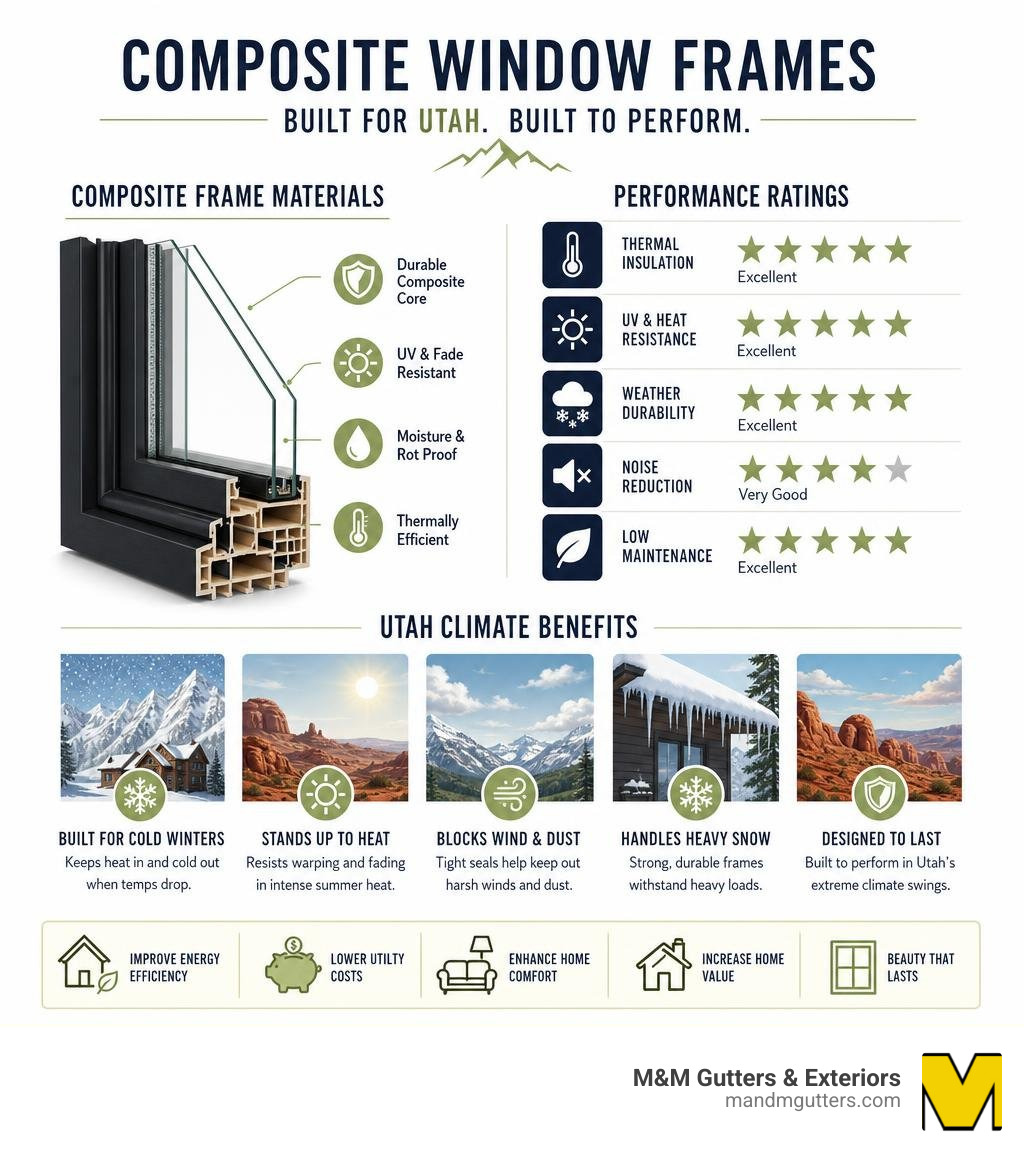
Composite frames solve problems that wood, vinyl, and aluminum simply can’t. They resist warping, rotting, and UV fading — while delivering the warm look of natural wood without the ongoing maintenance headache.
I’m Nathan Nuttall from M&M Gutters & Exteriors, and after more than 30 years helping Utah homeowners protect and improve their homes’ exteriors, I’ve seen how the right composite frame windows in Utah can transform both comfort and energy costs. In this guide, I’ll walk you through the best options on the market so you can make a confident, informed decision.
Composite frame windows utah glossary:
What Are Composite Frame Windows Utah Homeowners Are Choosing?
When we talk to homeowners along the Wasatch Front, many are tired of the endless cycle of painting wood frames or watching cheap vinyl frames bend and draft under the hot July sun. That is where composite frames step in.
Composite windows are high-performance hybrid systems. They are designed to capture the structural strength and classic aesthetic of natural wood while incorporating the low-maintenance, weather-resistant properties of modern polymers. If you have been exploring Different Window Styles for Your Home, you will be glad to know that composite materials can be molded into almost any configuration, including double-hung, casement, sliding, awning, and picture windows.
How Composite Materials Are Made
So, how do manufacturers create a material that handles Utah’s wild weather so well? The secret lies in the blend.
Most high-quality composite window frames are manufactured by combining real wood fibers (often sawdust or wood chips salvaged from manufacturing processes) with thermoplastic polymers like PVC (polyvinyl chloride). These ingredients are mixed with high-strength epoxy resins and heated.
Through a high-tech extrusion process, this molten blend is pushed through precision dies to form solid, incredibly dense window profiles. This creates an engineered material with excellent structural integrity. Unlike hollow vinyl, composite frames are solid throughout, giving them superior screw-holding power and unmatched resistance to impact.
Why Choose Composite Frame Windows Utah Over Traditional Wood?
We all love the classic, warm look of a real wood window. But solid wood requires a lifetime commitment to sanding, scraping, painting, and sealing. If you miss a maintenance cycle, Utah’s winter snowmelt and spring rains will find their way into the wood, leading to rot, mold, and warping.
Composite frames eliminate these headaches. Because the wood fibers are completely encased in protective PVC polymers and epoxy, moisture cannot penetrate the material. It will not rot, peel, or blister, and termites will completely ignore it. You get the authentic look of a painted or stained wood window without the weekend chore list. For a deeper dive into how different materials stack up, check out our guide on Fiberglass Windows vs Vinyl: Shattering the Myths of Window Durability.
Comparing Composite Windows to Vinyl, Wood, Fiberglass, and Aluminum
Choosing the right window frame material can feel overwhelming. To make things simple, let’s look at how composite frames compare directly to other common options across the factors that matter most to Utah homeowners.
| Frame Material | Durability | Maintenance | Thermal Insulation | Relative Cost |
|---|---|---|---|---|
| Vinyl | Moderate (can warp in extreme heat) | Very Low | Good | Budget-Friendly |
| Wood | High (if maintained) | High (requires painting/staining) | Excellent | Expensive |
| Fiberglass | Extremely High | Low | Excellent | Premium |
| Aluminum | High | Low | Poor (unless thermally broken) | Moderate to High |
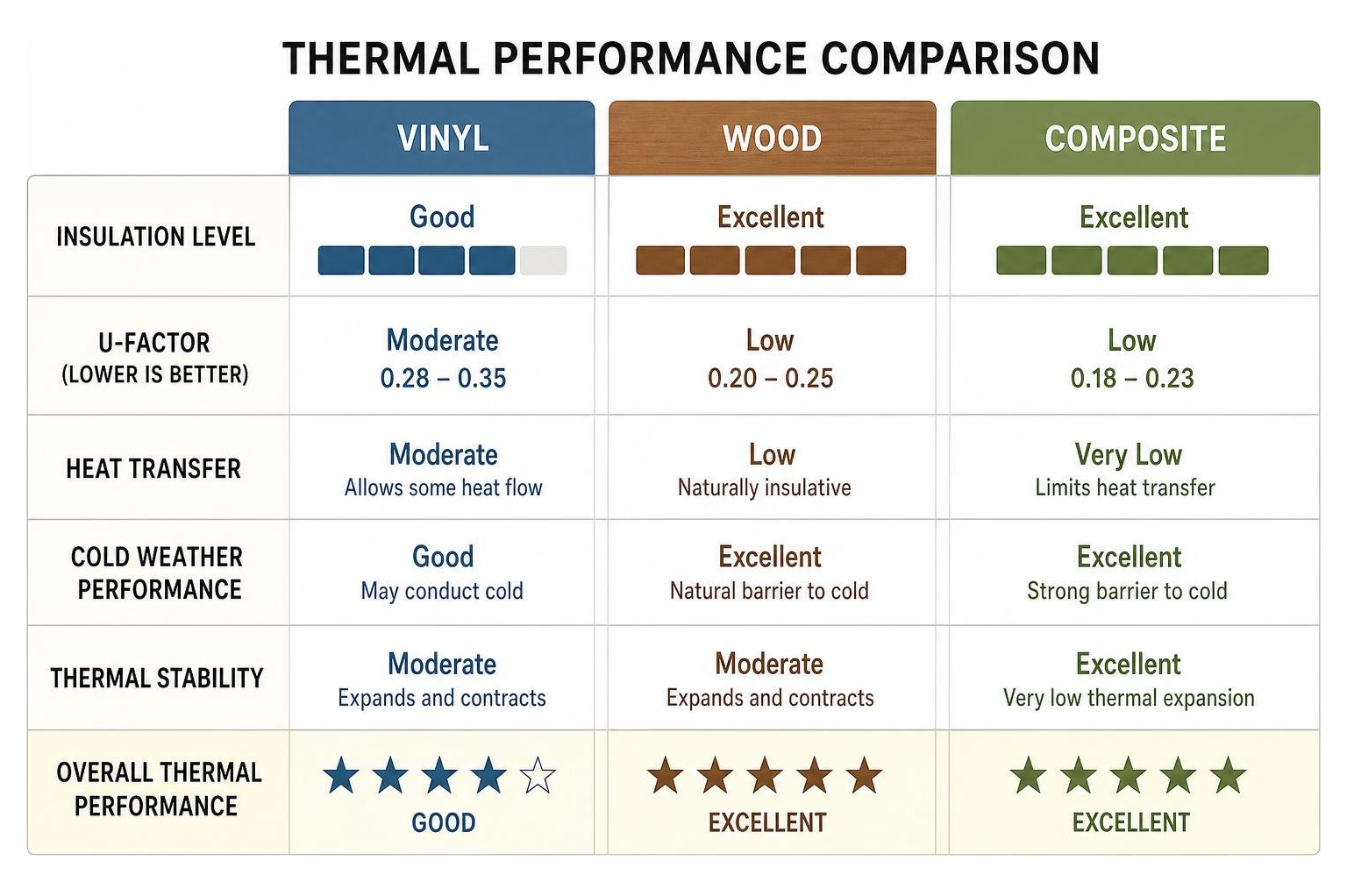
| Composite | Extremely High | Very Low | Excellent | Moderate to Premium |
While modern, high-performance systems like Architectural Aluminum Windows & Doors for Utah Custom Homes – AEROFRAME offer incredible ultra-slim sightlines for contemporary architectural designs, composite frames remain the gold standard for homeowners seeking a traditional, cozy aesthetic combined with maximum thermal insulation.
Durability and Maintenance Differences
Let’s break down how these materials handle the real world:
- Vinyl: While affordable and low-maintenance, vinyl has a high rate of thermal expansion. In places like Salt Lake County or Tooele County, where summer temperatures bake the valley, vinyl can expand, contract, and eventually break its perimeter seals, leading to drafts.
- Wood: Offers beautiful natural insulation, but Utah’s dry air can cause the wood to shrink and crack, while winter snow causes it to swell. This constant movement ruins paint finishes quickly.
- Aluminum: Highly durable and structurally strong, but raw aluminum is a natural conductor of heat and cold. Without advanced thermal breaks, it will transfer the winter chill right into your living room.
- Composite: Combines the best of all worlds. It maintains its shape across extreme temperature swings, boasts a low rate of thermal expansion, and requires nothing more than an occasional wash with soapy water.
Cost vs. Long-Term Value
There is no getting around it: composite windows require a higher upfront investment than standard vinyl. However, looking at the long-term ROI paint a different picture.
According to the EcoWatch Utah window replacement guide, upgrading to energy-efficient windows can reduce your home’s energy bills by about 12%. Because composite frames insulate so well and do not warp or degrade, they retain their efficiency for decades. You save money on heating and cooling year after year, avoid the recurring costs of paint and sealant, and significantly boost your home’s resale value.
How Composite Windows Perform in Utah’s Diverse Climates
Utah’s geography is remarkably diverse, and our weather varies wildly depending on where your home sits.
In the Wasatch Front (including Salt Lake, Davis, and Weber counties), homes face a mix of smoggy winter inversions, heavy spring rain, and dry, high-UV summer heat. In high-altitude mountain resort areas like Park City and Summit County, windows must withstand freezing temperatures and massive snow loads.
Composite windows excel in all of these microclimates. Their solid construction handles heavy snow loads without bowing, and their advanced thermal stability prevents drafts during winter storms.

Energy-Efficiency Features to Look For
To get the most out of your new composite windows, you need to pair those high-performance frames with the right glass package. If you want to understand all your options, take a look at our article From Single-Pane to Low-E: Decoding Your Window Glass Choices.
When reviewing window estimates, keep an eye on these key performance ratings:
- U-Factor: This measures how well the window keeps heat from escaping. For Utah’s cold winters, look for a U-factor of 0.30 or lower.
- Solar Heat Gain Coefficient (SHGC): This measures how much solar radiation passes through the glass. Along the Wasatch Front, a balanced SHGC (around 0.25 to 0.30) helps block hot summer rays while still letting in some winter warmth.
- Low-E Glass: Microscopic metal oxide coatings reflect infrared heat back to its source, keeping your home warmer in winter and cooler in summer.
- Argon Gas Fill: Insulating argon gas sealed between double or triple glass panes slows down heat transfer significantly compared to air-filled windows.
Climate-Resistant Benefits of Composite Frame Windows Utah
One of the biggest advantages of composite frame windows in Utah is their remarkable dimensional stability.
Materials like vinyl expand and contract dramatically when temperatures swing 40 degrees in a single day (which happens often in Utah). This movement puts immense stress on the caulking and foam insulation surrounding the window frame. Over time, those seals fail, creating hidden air leaks.
Composite frames expand and contract at nearly the exact same rate as glass. This means the entire window unit moves together as a single cohesive system, preserving the airtight perimeter seals and keeping your home comfortable for the long haul.
Cost, Customization, and Installation of Composite Windows in Utah
When planning a window replacement project, understanding the balance of costs, design options, and the installation process is key to a stress-free upgrade.
Typical Costs and Local Incentives
In Salt Lake City and the surrounding counties, composite windows typically range from $400 to $1,400 per window installed, depending on the size, style, and glass options you choose.
While the initial price is higher than basic vinyl, the financial return is substantial:
- Energy Savings: Replacing old single-pane windows with Energy Star-certified models can save homeowners in areas like Syracuse, UT upwards of $333+ per year on utility bills.
- Carbon Footprint: Upgrading reduces home energy demand, shrinking your environmental footprint by an average of 235 pounds of CO2 per year.
- Tax Credits: Under current federal programs, installing Energy Star-certified windows can qualify you for federal tax credits of up to 30% of the product cost (up to $600 annually). Local Utah utility companies occasionally offer additional rebates for certified energy upgrades.
What to Look For in a Utah Window Installer
Even the most expensive, high-tech composite window will fail if it is installed poorly. Poor flashing, improper leveling, or cheap sealants will lead to drafts, water leaks, and structural damage over time.
When searching for a contractor, read our guide on How to find the best window installation near me. Make sure your installer is licensed, insured, has positive local reviews, and offers a clear workmanship warranty. At M&M Gutters & Exteriors, we bring over 30 years of local experience to every job, ensuring your windows are sealed perfectly against Utah’s unique elements.
Frequently Asked Questions About Utah Composite Windows
How long do composite windows typically last?
With professional installation and basic care, high-quality composite windows can easily last 30 to 40 years or more. Unlike wood, which can rot within 10 to 15 years if neglected, or vinyl, which can become brittle from intense UV exposure over two decades, composite materials are highly resistant to degradation, warping, and cracking. Most premium composite brands back their products with robust lifetime warranties.
Do composite windows require painting or staining?
No, they do not! Most composite windows feature factory-applied, co-extruded color finishes or acrylic-based capstocks that are fused directly to the frame material. This process creates a incredibly durable finish that resists scratching, chipping, and fading under Utah’s intense UV rays. You can enjoy the look of painted wood without ever having to pick up a paintbrush.
Can composite windows help lower my Utah energy bills?
Absolutely. Because composite frames are solid and possess a very low rate of thermal conductivity (meaning they do not easily transfer heat or cold), they act as a highly effective barrier. When paired with double- or triple-pane Low-E glass, upgrading your home’s windows can reduce your overall heating and cooling bills by approximately 12%.
Conclusion
Upgrading your home with composite frame windows in Utah is one of the smartest investments you can make for your property’s comfort, efficiency, and curb appeal.
At M&M Gutters & Exteriors, we have spent more than three decades serving families across Salt Lake, Davis, Weber, Tooele, Summit, and Utah counties. We understand the specific demands our climate puts on your home’s exterior. To make your project as smooth as possible, we use cutting-edge HOVER 3D visualization technology, allowing you to see exactly how different window styles and colors will look on your home before we ever cut a single piece of trim.
Ready to say goodbye to drafty rooms and high energy bills? Upgrade your home with professional window services by contacting us at M&M Gutters & Exteriors today for a friendly, no-pressure consultation!