


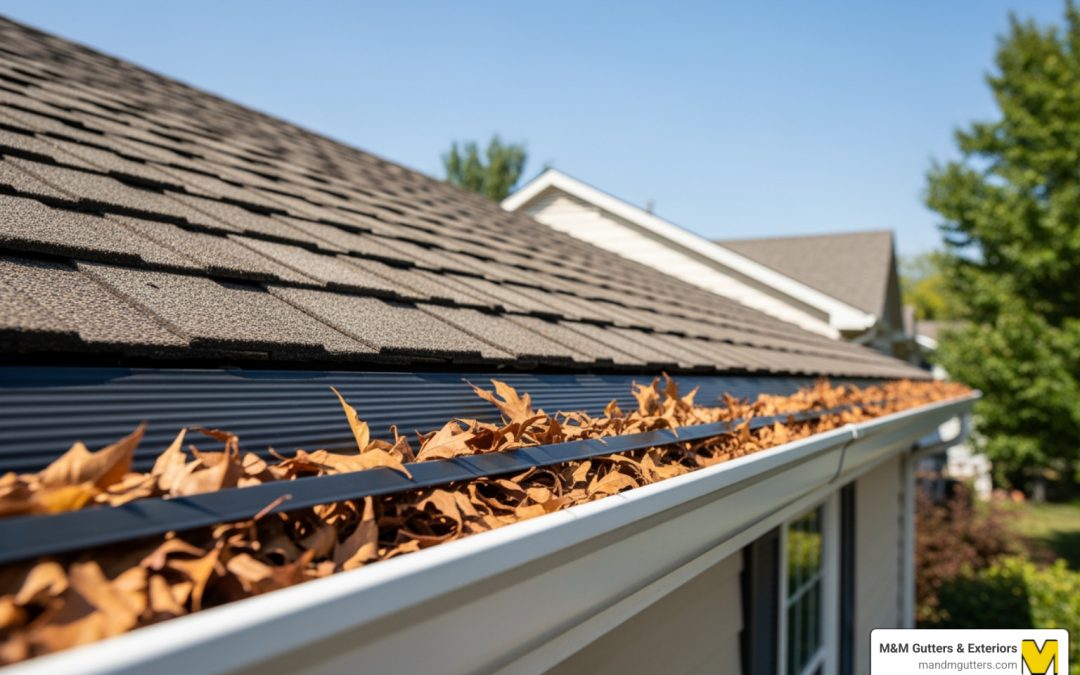
What the Real Data Says About Leaf Guard Reviews Consumer Reports
Leaf guard reviews consumer reports data tells a mixed story — and if you want the quick version, here it is:
| Source | Rating | Key Finding |
|---|---|---|
| Consumer Reports (2010) | N/A | Micro-mesh systems rated top for professional and DIY installs |
| Trustpilot | 2.1 / 5 (74 reviews) | Mostly negative; sales and service complaints |
| BBB | A+ rating, 1.5 / 5 (166 reviews) | 317 complaints in 3 years; 161 service/repair issues |
| Customer surveys | 75% satisfied with performance | High cost remains top concern |
The bottom line: gutter leaf guard systems can work well, but real-world reviews reveal serious concerns about pricing, sales pressure, and after-sale service that Consumer Reports’ outdated 2010 test simply doesn’t cover.
So why is there so much confusion? Homeowners searching for honest, up-to-date information run into a wall of promotional content, a single aging Consumer Reports test, and thousands of raw reviews scattered across Reddit, Yelp, Trustpilot, and the BBB. Sorting through all of that takes time most people don’t have.
That’s where this article comes in. We’ve pulled together the real data — the good, the bad, and the expensive — so you can make a smart decision before anyone shows up at your door with a four-hour sales pitch.
I’m Nathan Nuttall from M&M Gutters & Exteriors, and with over 30 years serving Utah homeowners, I’ve seen what the leaf guard reviews consumer reports landscape gets right and where it falls short. Let’s walk through what the evidence actually shows.

Related content about leaf guard reviews consumer reports:
Analyzing Leaf Guard Reviews Consumer Reports and Testing Data
When homeowners start their research, they almost always look for the gold standard: Consumer Reports. However, when it comes to gutter protection, the data is surprisingly thin.
Key Takeaways from Leaf Guard Reviews Consumer Reports
In their September 2010 issue, Consumer Reports conducted a rigorous test of nearly 20 different gutter guard systems. Their methodology involved simulating heavy rain and dumping various types of debris—from large maple leaves to tiny pine needles—onto the guards to see what stayed out and what went in.
The results were eye-opening. They concluded that micro-mesh systems generally outperformed the “solid” reverse-curve designs when it came to keeping out small debris. While reverse-curve systems (which rely on liquid adhesion to pull water into the gutter while dropping leaves off the edge) were great at handling large leaves, they struggled with smaller items like shingle grit and pine needles.
One of the big questions we get in Salt Lake City is, “do gutter leaf guards work?” According to that 2010 report, the answer is “yes,” but with a caveat: no system is 100% maintenance-free. Even the top-rated systems eventually needed a quick brush-off or a check-up to ensure water wasn’t overshooting the gutter during a Utah downpour.
Why hasn’t there been a recent leaf guard reviews consumer reports update?
You might notice that the September 2010 issue is quite old. In fact, Consumer Reports hasn’t published a major update to their gutter guard testing in over 14 years. This is a massive gap in the market.
Why the silence? Testing gutter guards is incredibly difficult and expensive. Unlike a toaster that you can test in a lab over a weekend, gutter guards need to be exposed to real-world weather—sun, snow, ice, and various tree types—over several seasons to see how they truly hold up. Furthermore, many professional-grade manufacturers refuse to sell their products to “anonymous” buyers for testing, insisting on professional installation only.
Because of this lack of recent data, homeowners have turned to YouTube testing videos and online forums to see how these products perform in the 2020s. We’ve found that while the basic physics haven’t changed, the materials have. Modern guards use better alloys and finer meshes, but the 2010 limitations—like moss growth and shingle grit buildup—still exist today.
Performance Realities: Clogs, Leaks, and Maintenance
Marketing materials often promise you’ll “never climb a ladder again.” While we’d love for that to be true, real-world leaf guard reviews consumer reports and customer testimonials tell a more grounded story.
Common Complaints and Maintenance Needs
The most frequent complaint we see on Trustpilot and Reddit isn’t about the gutters clogging inside—it’s about what happens on top.
- Small Debris: While big oak leaves might slide off, small leaves, maple “helicopters,” and pine needles often get stuck in the mesh or under the shingle line.
- Shingle Grit: If you have a newer asphalt roof, the sand-like grit will eventually wash down. In some systems, this grit can settle in the gutter or clog the fine pores of a micro-mesh.
- Moss and Algae: In shaded areas of your home, especially here in Northern Utah where we get plenty of moisture in the spring, moss can grow directly on the guard, blocking water flow.
- Ice Dams: This is a big one for us in Salt Lake and Summit County. Some guards can actually worsen icicle formation because the metal surface freezes over, preventing meltwater from entering the gutter.
So, do you still need to clean gutters with leaf guards? Usually, yes—but much less often. Instead of scooping out rotting muck twice a year, you might just need to blow off the top of the guards once every year or two. Knowing how to clean a leaf guard properly (usually with a soft brush or low-pressure water) is key to keeping your warranty intact.
Positive Aspects and System Benefits
It’s not all bad news. In fact, what are the pros and cons of leaf gutters? The “pros” are significant. About 75% of homeowners surveyed in 2025 reported being satisfied or very satisfied with their systems.
The biggest win is the prevention of major clogs that lead to basement flooding and foundation damage. A high-quality, seamless design with a scratch-resistant finish can look great for decades and handle massive amounts of water—some systems are rated for up to 32 inches of rain per hour! For homes in heavily wooded areas of Davis or Weber County, these systems are often the only thing standing between a dry basement and a total disaster.
The True Cost of Professional Gutter Protection
This is where the “unbiased” part of our review gets real. One of the most common shocks for homeowners is the price tag.
Sales Tactics and Pricing Structures
If you look at Reddit or the BBB, you’ll see a recurring theme: “The quote started at $18,000 and dropped to $7,000 by the time they left.” This is a classic high-pressure sales tactic.
Some major national brands use a commission-heavy structure (often 10-12% goes directly to the salesperson). We’ve seen reports of homeowners being quoted $66 per linear foot—that’s $9,570 for a standard 145-foot run! To put that in perspective, internal documents leaked on Reddit suggest the actual cost of materials and basic labor is a fraction of that.
Common complaints include:
- Predatory pricing targeting the elderly on fixed incomes.
- Sales reps refusing to leave until a contract is signed.
- “Fake” phone calls to managers to get a “special one-time discount.”
Before you sign anything, it’s vital to ask, “are gutter guards worth the investment?” At $15-$20 per foot, they can be. At $60+ per foot, you might be paying for the salesperson’s new car rather than your home’s protection.
Negotiating Your Estimate
If you do decide to go with a national brand, never accept the first, second, or even third price.
- Ask for a ballpark figure over the phone (though they will likely refuse).
- Be prepared for a 2-4 hour presentation.
- Mention that you are getting other quotes.
You have to decide, “is a leaf guard worth it” for your specific budget. In Salt Lake City, we prefer a more transparent approach—no games, just honest pricing based on your home’s actual needs.
Installation Quality and Warranty Reliability
Even the best product will fail if it’s installed poorly. Leaf guard reviews consumer reports often overlook the “human element” of the installation.
Evaluating the Lifetime Warranty
Most companies offer a “Lifetime No-Clog Warranty.” But read the fine print. Often, this warranty only covers the gutters clogging, not the top of the guard getting covered in debris. If water overflows because the guard is covered in pine needles, many companies will tell you that’s a “maintenance issue,” not a warranty issue.
Other common exclusions include:
- Damage from hail (a real concern in Northern Utah).
- Issues caused by the roof or “pitch” of the gutters if they weren’t adjusted during install.
- Changes made to the home or roof after installation.
The BBB has recorded hundreds of complaints regarding “no-shows” for warranty repairs. Some homeowners wait months for a technician to come out and fix a simple leak. This is why seamless protection is so important—it minimizes the number of seams and failure points from the start.
Trustpilot and BBB Ratings
Looking at the aggregate data, the industry has a bit of a reputation problem. With a TrustScore of 2.1 and an average BBB customer rating of 1.5/5 for some of the biggest names, it’s clear that the “after-purchase” experience is where most companies fail. Most of the 317 complaints filed against major holdings in the last three years were for “Service or Repair Issues,” not the product itself.
Frequently Asked Questions about Leaf Guard Reviews Consumer Reports
What are the most recommended alternatives to one-piece systems?
Many experts and what are the best leaf guards for gutters guides suggest micro-mesh guards that can be retrofitted to your existing gutters. These are often more affordable and, according to the 2010 Consumer Reports test, more effective at filtering out small debris than the solid one-piece “hood” systems.
How does the reverse-curve design handle heavy rain?
Reverse-curve systems use the principle of liquid adhesion (the same way water follows the curve of a glass when you pour it). While they can handle up to 32 inches of rain per hour on a straight run, they often struggle with “steep roof valleys” where water gains too much speed and shoots right over the edge. You can see more about this in rain intensity research.
Can these systems be installed on existing gutters?
It depends on the brand. Some systems require a total replacement of your gutters (which adds to the cost), while others can leaf guards be installed on existing gutters quite easily. If your current gutters are in good shape, a retrofit is usually the more cost-effective choice.
Conclusion
At M&M Gutters & Exteriors, we believe in giving our Salt Lake City neighbors the straight story. We’ve been serving Northern Utah for over 30 years, and we know that every home in Salt Lake, Davis, and Weber County has unique needs. Whether you’re dealing with the heavy snow of Summit County or the leafy streets of the Avenues, you deserve a solution that works without the high-pressure sales tactics.
We use advanced technology like HOVER 3D visualization to show you exactly how your home will look and provide an unbiased analysis of what your gutters actually need. If you’re tired of the “big brand” games and want a local team that stands by its work, check out our services leaf guards page or give us a call for a transparent, no-nonsense quote. Let’s keep your home protected, the right way.