


What a Leaf Guard Does for Your Gutters
A leaf guard is a cover or filter that keeps leaves, twigs, and other debris out of your gutters while letting rainwater flow to the downspouts. It can reduce clogs, overflows, water damage near the foundation, and the need to climb a ladder for frequent cleanouts.
The right product depends on your roof, trees, existing gutters, and budget. Common options include:
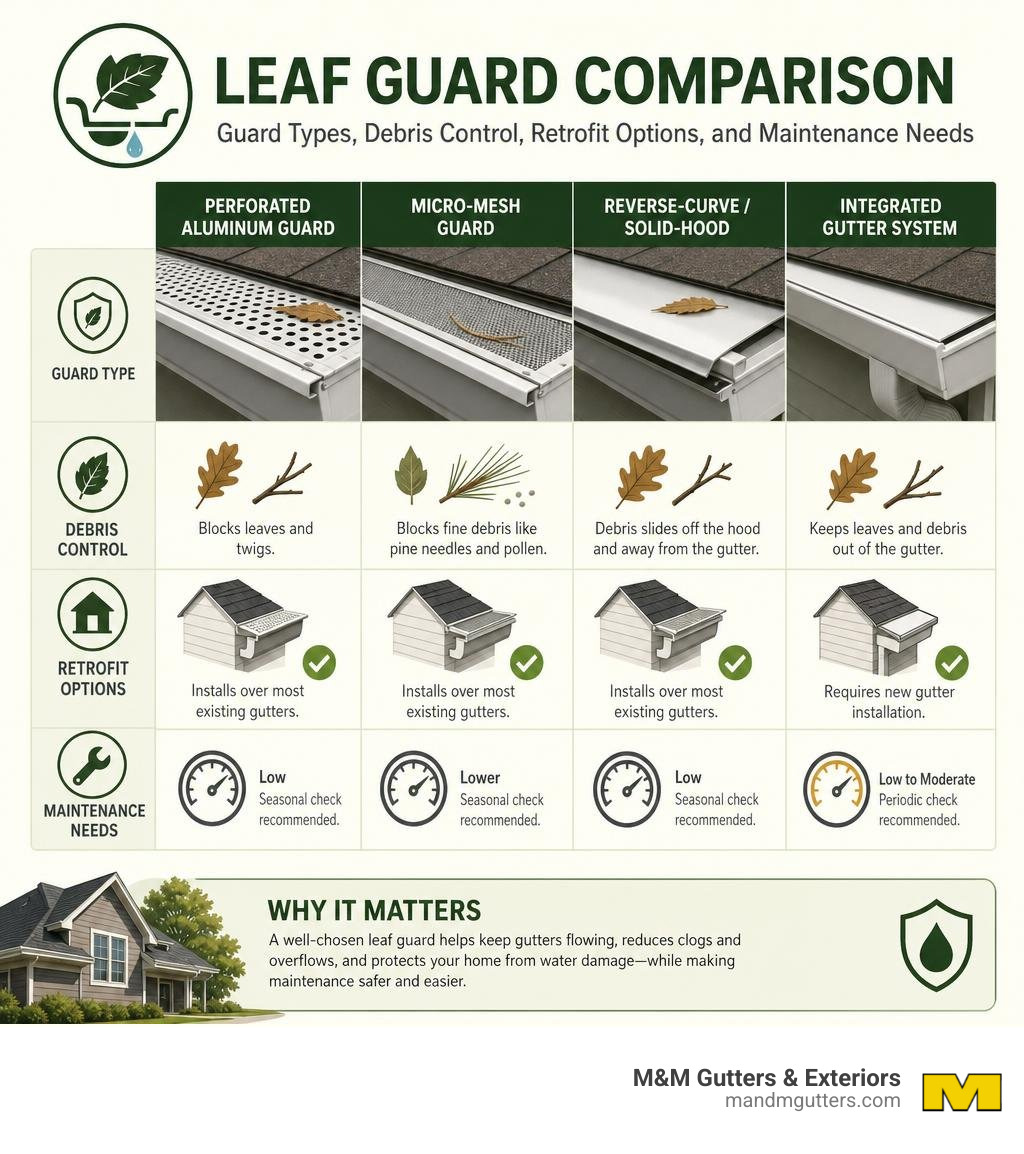
- Perforated aluminum guards that fit over existing gutters and shed larger debris
- Micro-mesh guards that block fine material such as pine needles and pollen
- Reverse-curve or solid-hood systems that use surface tension to pull water into the gutter while debris falls away
- Integrated one-piece gutter systems installed as part of a full gutter replacement
No guard makes a gutter system completely maintenance-free. But a well-fitted, durable system can make seasonal checks much simpler and help your gutters manage heavy runoff more reliably.
I’m Nathan Nuttall with M&M Gutters & Exteriors. For more than 30 years, our team has helped Utah homeowners choose and install leaf guard options alongside gutters, roofing, siding, and other exterior upgrades.
Leaf guard terms to learn:
Visual Guide to Leaf Guard System Types
Choosing the right gutter protection comes down to understanding how different designs handle local foliage, extreme downpours, and seasonal shifts. Let’s look at the primary categories available today.
Perforated Aluminum and Screen Profiles

Perforated aluminum systems are among the most versatile and durable options on the market. Engineered panels sit flat inside or directly over the gutter trough, secured with corrosion-resistant fasteners.
A prime example of this engineering is found in Leaf Relief® for Existing Gutters – Ply Gem. These systems feature patented Aluma-Perf technology, which uses precisely sized perforations to balance high water intake with natural debris shedding.
- Aerodynamic Clearance: Most dry, small debris naturally blows off the surface in a gentle 6 mph breeze, while wet leaves are cleared when winds reach 23 mph.
- Massive Water Capacity: High-grade perforated aluminum drains over 29 inches of rain per hour—more than double the highest hourly rainfall ever recorded by the US Weather Bureau.
- Low-Profile Aesthetics: Because they mount directly to the gutter rim using internal hangers, they stay virtually invisible from the ground.
If you are wondering what are the best leaf guards for gutters, perforated aluminum offers a great balance of durability, airflow, and cost-effectiveness.
Micro-Mesh and Dual-Layer Filtration

When homeowners ask us, “do gutter leaf guards work against tiny debris?”, micro-mesh is the standard answer. These systems use surgical-grade stainless steel mesh woven so finely that only water can pass through.
- Pine Needle and Pollen Protection: Micro-mesh prevents evergreen needles, seed pods, and fine tree pollen from entering the trough.
- Dual-Layer Strength: Systems like the Ply Gem DuoPro pair an under-layer perforated aluminum base with an upper stainless steel screen to resist heavy loads without sagging.
- Pest Barrier: The tight mesh prevents wasps, birds, and squirrels from nesting inside the gutters.
Reverse-Curve and Solid Hood Systems
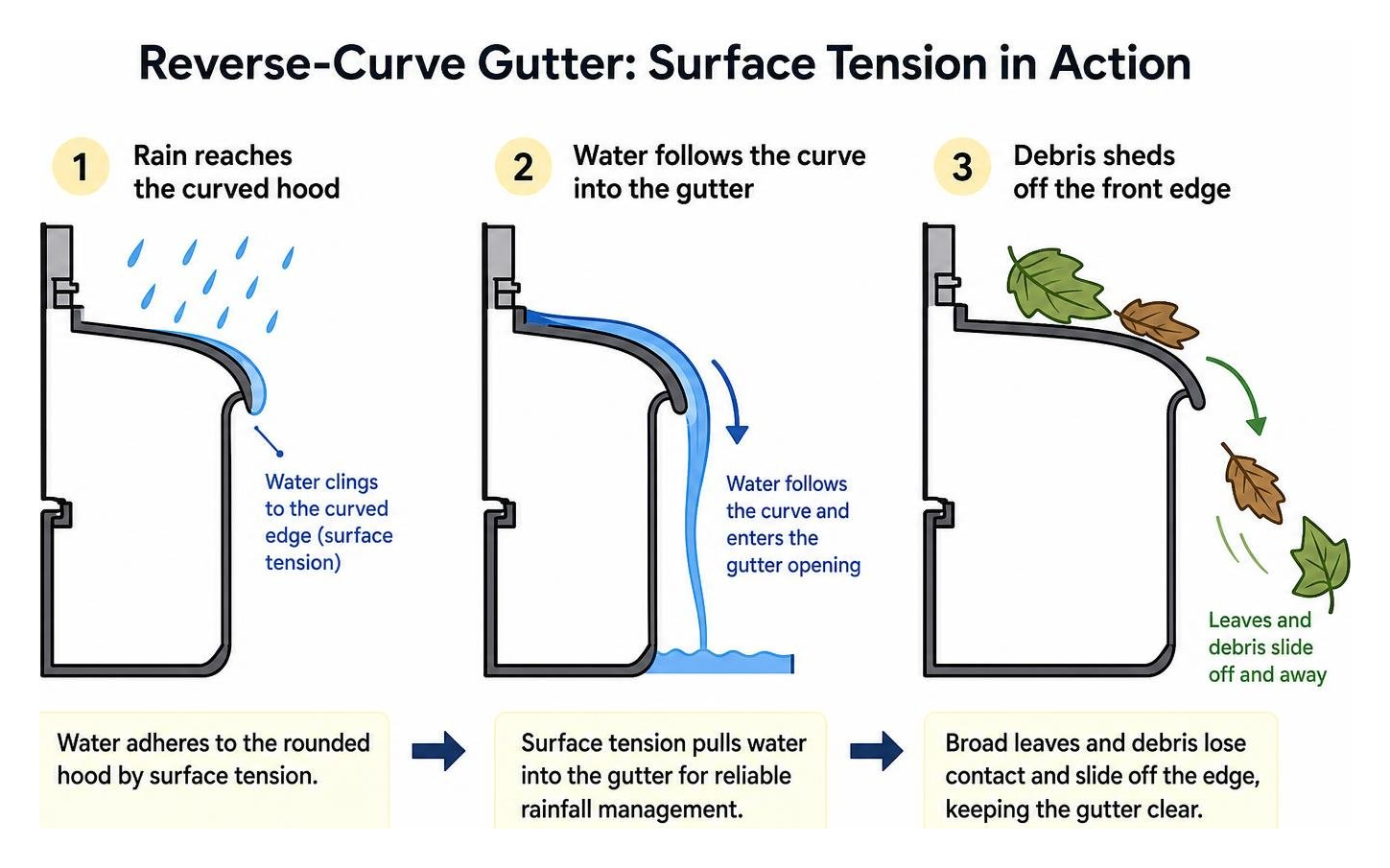
Solid hood or reverse-curve systems rely on the physical principle of liquid adhesion (surface tension). Water clings to the rounded metal nose of the hood and follows the curve into a narrow opening, while broad leaves and heavy debris slide straight off the edge.
- Extreme Rainfall Management: Engineered reverse-curve designs can process up to 32 inches of rainfall per hour.
- Heavy-Duty Construction: Many solid hood models use aluminum that is 20% thicker than standard residential gutter stock.
- Integrated Water Flow: These systems often incorporate downspouts that are 33% larger than average residential downspouts, preventing backups during sudden cloudbursts.
Gutter Protection Pricing Breakdown and Cost Factors
Cost Drivers for a Leaf Guard Installation
Gutter protection costs vary based on your roof’s architecture and the materials selected. Navigating leaf guard sticker shock: what to expect for your gutter protection budget is easier when you know the core variables:
- Linear Footage: The overall perimeter of your roofline directly dictates material and labor volume.
- Roof Pitch and Height: Steep multi-story roofs require extra safety setups and staging.
- Fascia and Rafter Health: If existing fascia boards are rotted or loose, they must be repaired before mounting guards.
- Material Quality: Rustproof aluminum and marine-grade stainless steel carry a higher upfront cost than basic vinyl or plastic screens, but last decades longer.
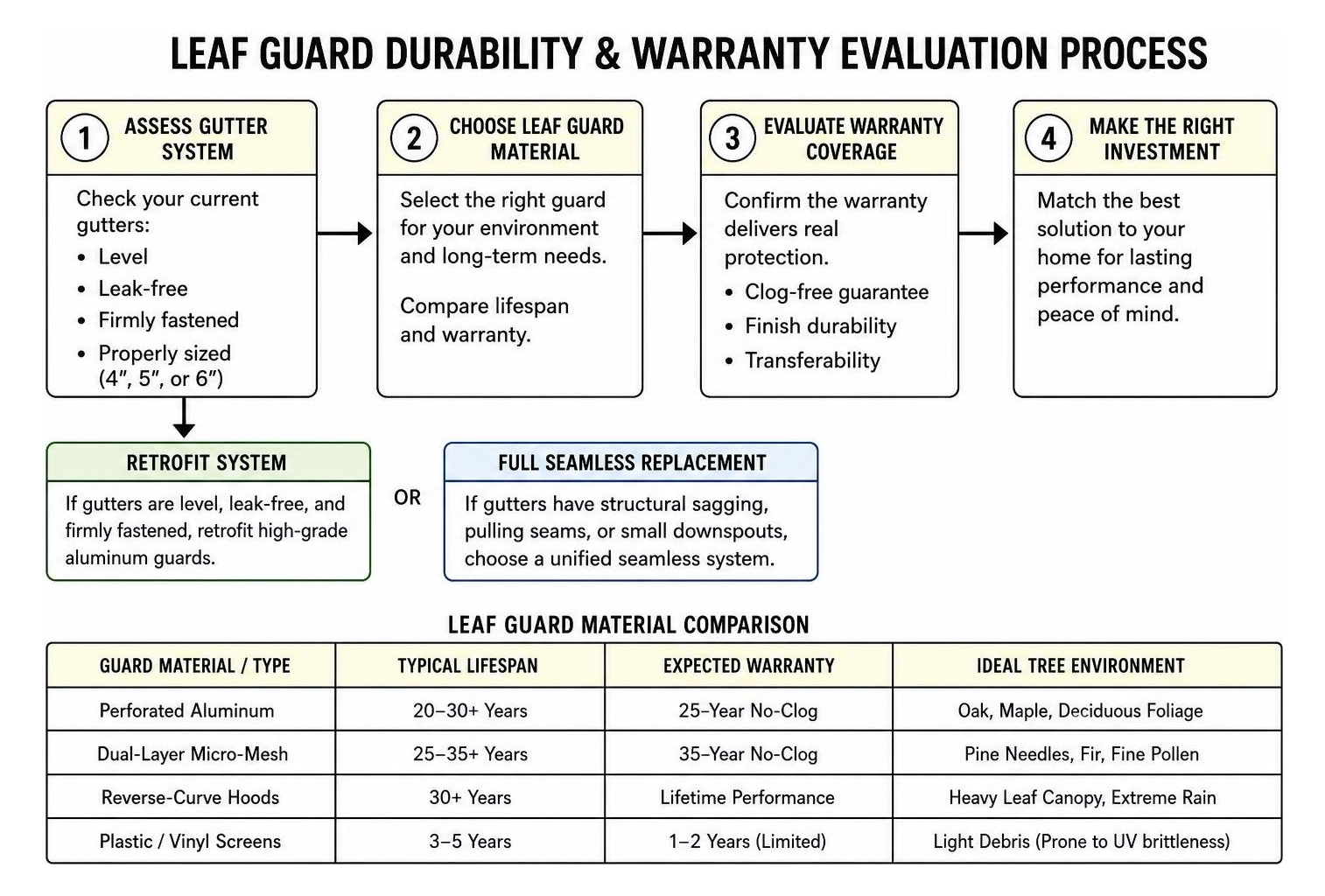
| Guard Material / Type | Typical Lifespan | Expected Warranty | Ideal Tree Environment |
|---|---|---|---|
| Perforated Aluminum | 20–30+ Years | 25-Year No-Clog | Oak, Maple, Deciduous Foliage |
| Dual-Layer Micro-Mesh | 25–35+ Years | 35-Year No-Clog | Pine Needles, Fir, Fine Pollen |
| Reverse-Curve Hoods | 30+ Years | Lifetime Performance | Heavy Leaf Canopy, Extreme Rain |
| Plastic / Vinyl Screens | 3–5 Years | 1–2 Years (Limited) | Light Debris (Prone to UV brittleness) |
Retrofit vs. Full System Replacement
A major question homeowners face is whether can leaf guards be installed on existing gutters or if a total replacement is required.
- Retrofit Systems: If your current 4-inch, 5-inch, or 6-inch gutters are level, leak-free, and firmly fastened, retrofitting high-grade aluminum guards is straightforward and cost-effective.
- Full Seamless Replacement: If your troughs have structural sagging, pulling seams, or small downspouts, installing a unified seamless system is the smarter path.
Weighing these options helps determine whether are gutter guards worth the investment? unpacking the price tag for your home’s long-term value.
Performance, Installation, and Warranty Coverage
How to Evaluate Leaf Guard Warranties and Durability
A warranty is only as reliable as the manufacturer and contractor standing behind it. Understanding why the leaf guard warranty is a homeowner’s best friend ensures you get genuine long-term value.
- Clog-Free Guarantees: Look for products with clear performance warranties, such as the 25-year to 35-year No-Clog, No-Overflow terms backed by Ply Gem.
- Finish Durability: High-grade guards feature scratch-resistant, baked-on enamel or natural copper finishes that will not rust, peel, or warp under sun exposure.
- Transferability: If you plan to sell your home down the road, check whether the warranty transfers to the next owner.
Weather Performance and Seasonal Maintenance
Utah’s climate brings summer downpours, high winds, and heavy winter snowpacks. Gutter guards must stand up to these changing loads without collapsing.
- Snow and Ice Management: Rigid aluminum guards reinforce the gutter’s top edge, helping prevent troughs from twisting under heavy snow loads.
- Maintenance Realities: Homeowners frequently ask, “do you still need to clean gutters with leaf guards?” While guards eliminate the chore of scooping muck out of your troughs, you should still do a periodic ground-level check or hose rinse to remove fine roof grit and pollen.
Professional installation is critical for long-term reliability. Exploring seamless protection: the ins and outs of professional gutter guard installation shows why secure internal bracket spacing and correct pitch alignment matter.
Frequently Asked Questions About Gutter Protection
Can gutter covers void your roof warranty?
Most modern professional guards do not void your roof warranty because they mount directly to the gutter’s front and rear edges rather than sliding under the shingles. Systems that penetrate or break shingle seal strips can compromise roofing coverage, which is why gutter-mounted profiles are the preferred choice.
How much rainfall can high-performance gutter covers handle per hour?
High-grade perforated and reverse-curve gutter protection systems can handle between 29 and 32 inches of rainfall per hour. Because the highest recorded rainfall in US history is under 11 inches per hour, these systems offer plenty of capacity for severe cloudbursts when paired with clean downspouts.
How often should protected gutters be inspected?
We recommend a quick visual inspection twice a year—once in late spring after tree pollination and once in late autumn after the leaves have fallen. A quick rinse with a garden hose nozzle is usually all that is needed to clear away any surface residue.
Protect Your Home with M&M Gutters & Exteriors
Choosing the right gutter protection prevents foundation erosion, protects your siding, and saves you from dangerous ladder chores. At M&M Gutters & Exteriors, we bring over 30 years of exterior remodeling experience across Salt Lake City, Salt Lake County, Utah County, Summit County, Tooele County, Davis County, Weber County, and Northern Utah.
We take the guesswork out of home improvements by offering 3D visualization using HOVER, allowing you to preview gutter profiles and colors on your home before installation begins.
Ready to upgrade your home with durable gutter protection? Explore our services – leaf guards to schedule your estimate today.