


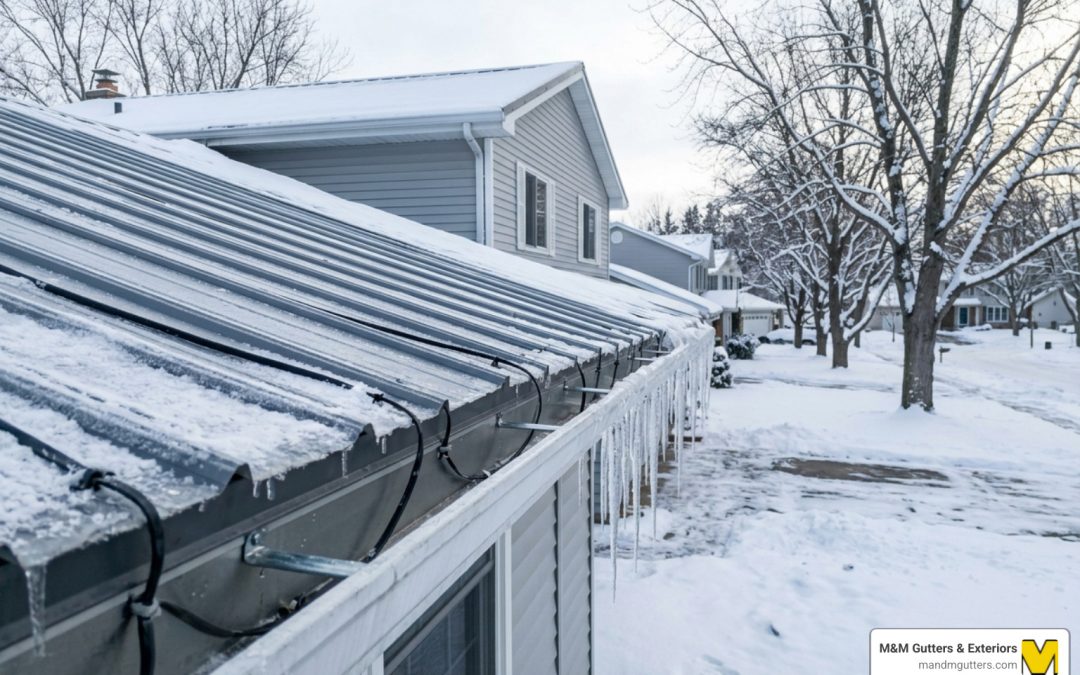
Why Ice Dams on Metal Roofs Are a Bigger Problem Than You Think
Heat tape for metal roofs is the most reliable way to prevent ice dams from damaging your home during Utah’s freeze-thaw winters. Here’s a quick answer if that’s all you need:
Quick Guide: Heat Tape for Metal Roofs
| What to Know | The Short Answer |
|---|---|
| Best cable type | Self-regulating heat cable |
| Where to install | Eaves, valleys, gutters, downspouts |
| Key feature to look for | UL listing + 10-year warranty |
| Typical starting cost | Around $100 for basic systems |
| DIY or pro install? | Either — pro recommended for metal roofs |
Many homeowners assume a metal roof means no ice dam problems. Metal sheds snow fast, right? Not quite.
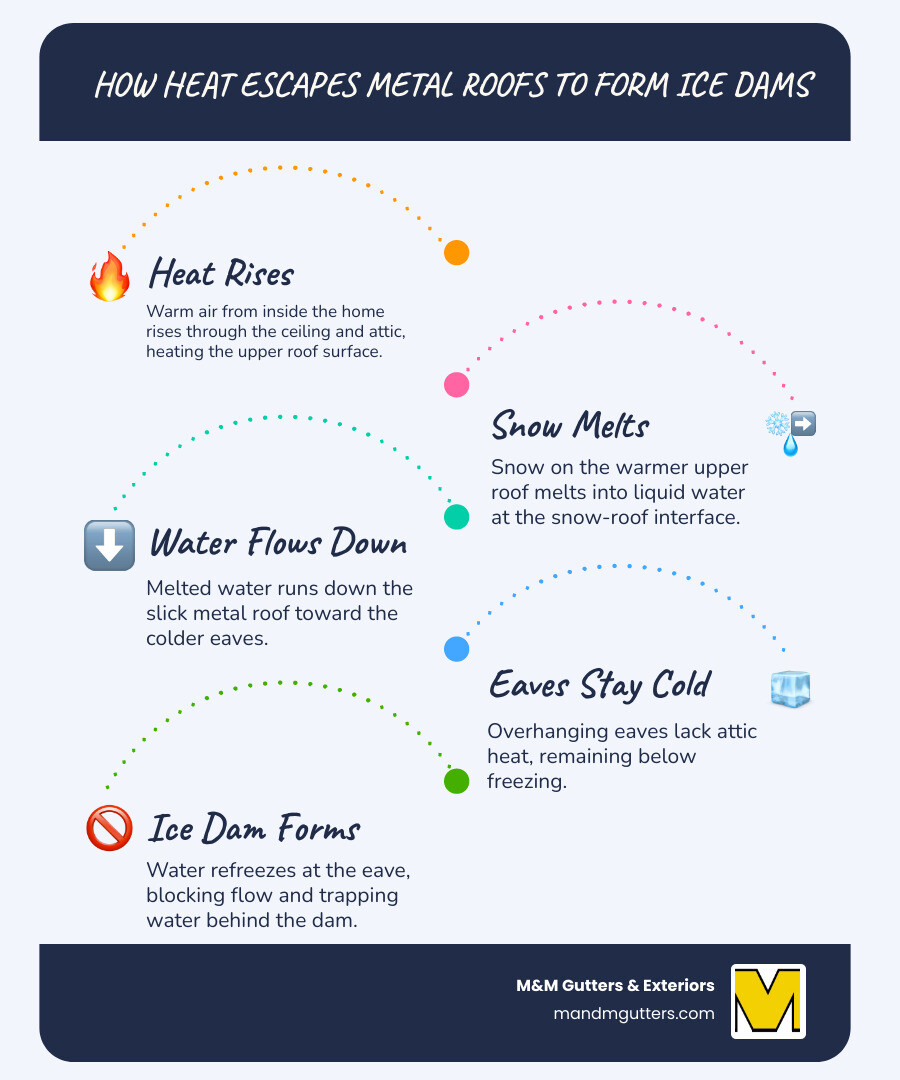
Even on a metal roof, heat escaping from your living space warms the upper roof deck. Snow melts at the roof-snow interface and flows downward. When that water hits the cold overhang at your eave — where there’s no heat loss from below — it refreezes. That’s an ice dam. And on metal roofs, the same process concentrates in valleys, transitions, and edges, often more severely than on shingle roofs.
Left unchecked, ice dams force water under your roof panels, damage gutters, add crushing structural loads, and can send dangerous slabs of ice sliding off the roof.
I’m Nathan Nuttall from M&M Gutters & Exteriors, and after 30+ years helping Utah homeowners protect their homes, heat tape for metal roofs is one of the most common — and most misunderstood — solutions I see. Let me walk you through everything you need to know to get it right.
Why Metal Roofs Need heat tape for metal roofs
It is a common myth in Salt Lake City and across Northern Utah that metal roofs are “immune” to ice dams. While it’s true that metal has a slick surface that helps shed snow, the physics of ice formation doesn’t care about your roof material. In fact, Can You Have A Metal Roof On A Home In Utah is a question we answer often, and the answer is yes—but only if you account for the unique way they handle ice.
The Science of the “Shed”
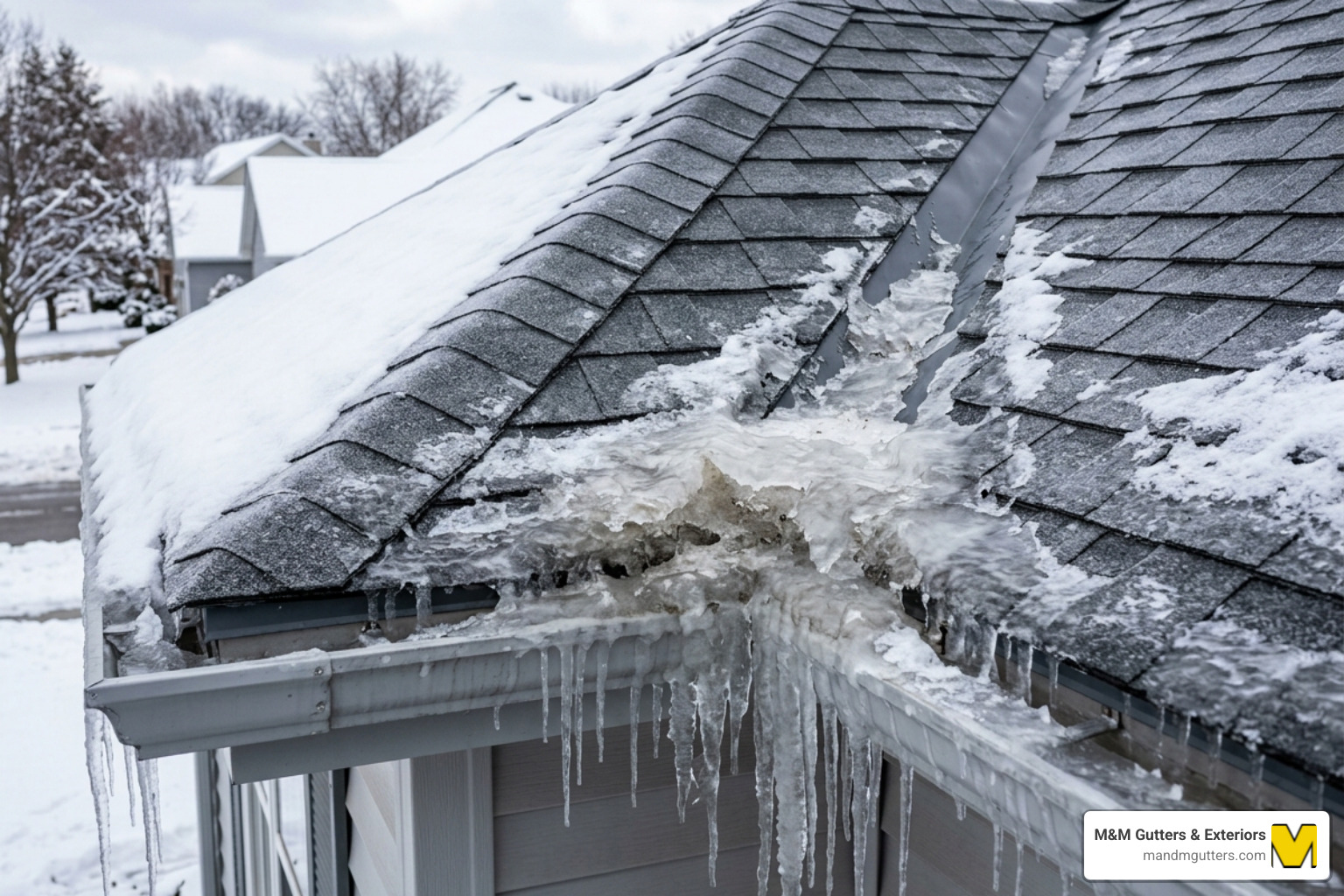
On a sunny winter day in Davis or Weber County, solar gain warms the dark metal panels. Simultaneously, building heat loss from poorly insulated attics warms the roof from below. This creates a layer of meltwater between the roof surface and the snow pack. As this water trickles down to the cold eaves (the part of the roof that overhangs the house and doesn’t receive interior heat), it flashes into solid ice.
Unlike porous snow, which allows some drainage, solid ice is an impenetrable barrier. This forces liquid water to back up, often finding its way into the small gaps in standing seams or R-panels. This is why How To Prevent Ice Dams is a critical topic for metal roof owners.
Structural Stress and Safety
When comparing a Metal Roof Vs Shingles, metal is much more prone to “snow slides.” Without heat tape for metal roofs, a massive ice dam can act as a “deadman,” holding back thousands of pounds of snow. When that ice finally breaks or melts, the entire load can slide off at once, potentially ripping gutters off the fascia or damaging anything (or anyone) below.
By installing a dedicated de-icing system, you create “melt pathways.” You aren’t trying to melt the whole roof—you’re just keeping the “drainage veins” open so water can escape before it turns into a structural nightmare.
Self-Regulating vs. Constant Wattage Technology
If you walk into a big-box hardware store in Salt Lake County, you’ll likely see rolls of cheap “heat tape.” Most of this is constant wattage cable, and for a metal roof, it is often the wrong choice.
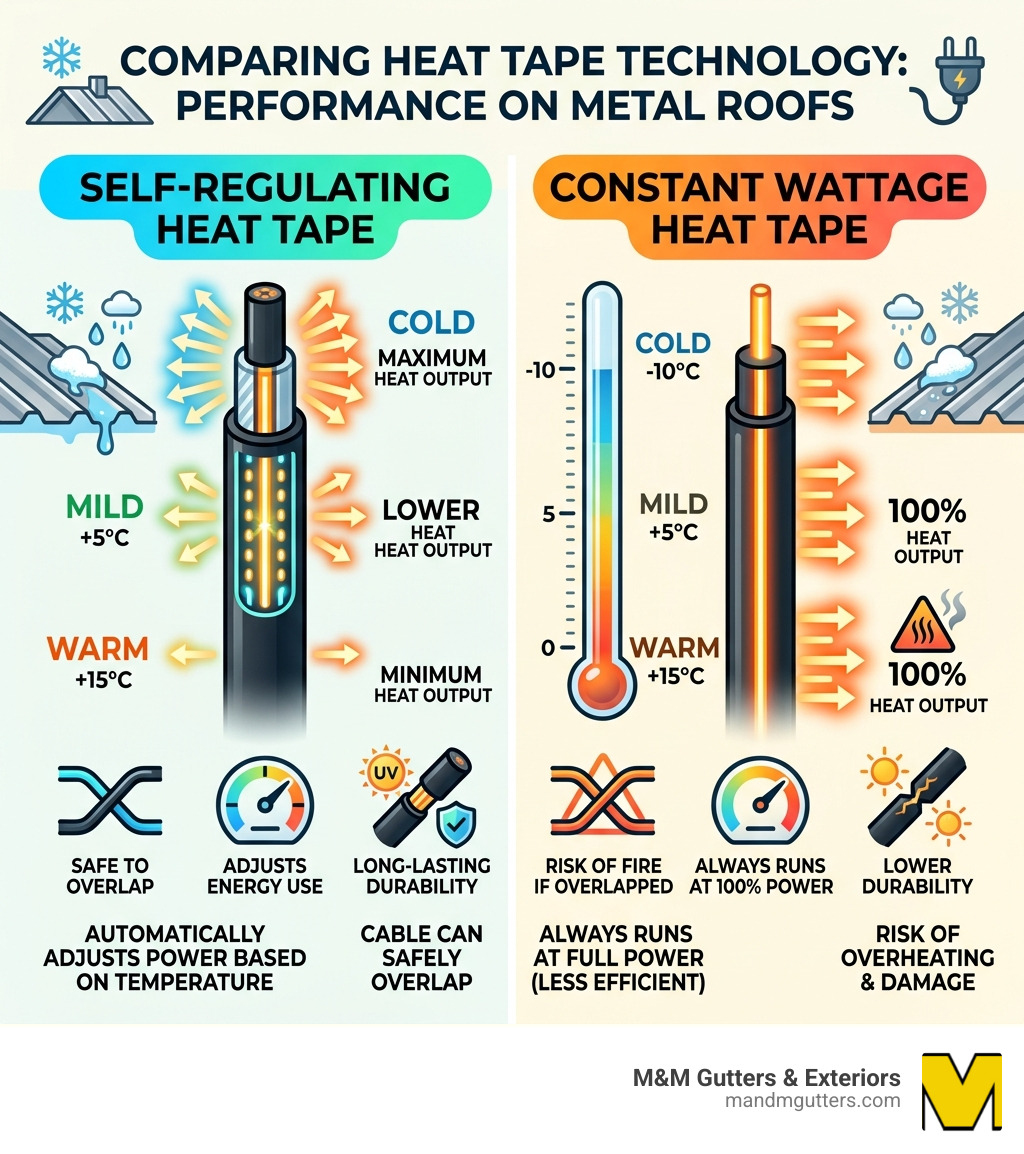
| Feature | Self-Regulating Cable | Constant Wattage Cable |
|---|---|---|
| Safety | Cannot overheat; safe to overlap | Risk of fire if overlapped |
| Efficiency | Adjusts output based on temp | Always runs at 100% power |
| Durability | High (UV stable, thick jacket) | Low (fragile, thin plastic) |
| Metal Roof Use | Highly Recommended | Often Not Approved |
| Warranty | Up to 10 Years | Typically 1-2 Years |
Why Self-Regulating is King
Self-regulating technology uses a specialized conductive core that shrinks and expands at a microscopic level. When it’s cold, the core contracts, allowing more electricity to flow and generating more heat (up to 9-10 W/ft in deep cold). When the sun comes out and the roof warms up, the core expands, reducing the flow and saving you money on your Utah Power bill.
More importantly, self-regulating cable is safe to overlap. On a complex metal roof valley, cables often need to cross over themselves. Constant wattage cables will “hot spot” and burn out (or worse, start a fire) if they touch. This makes Are Heating Roof Cables A Necessary Addition To Your Utah Home a resounding “yes” for those using self-regulating tech.
Choosing the Best heat tape for metal roofs
When we evaluate products for our neighbors in Summit or Tooele County, we look for three non-negotiables:
- UL Listing: Ensure the cable is specifically rated for “Roof and Gutter De-Icing.”
- Warranty: Look for a 10-year warranty, like those found on Heat Tape Pro. This reflects the manufacturer’s confidence in the cable’s UV stability.
- LED Indicators: Systems with a “GlowCap” or LED end-light allow you to see from the ground if the system is actually receiving power. There’s nothing worse than thinking you’re protected only to find a tripped breaker after the storm hits.
For more details on specific product compatibility, check out this guide on Heat Tape for Metal Roofs – Reliable Ice Dam Prevention.
Installation Strategies for Different Metal Roof Profiles
Installing heat tape for metal roofs isn’t a one-size-fits-all job. The profile of your metal—whether it’s a modern standing seam or a rugged corrugated panel—dictates how the cable must be laid.
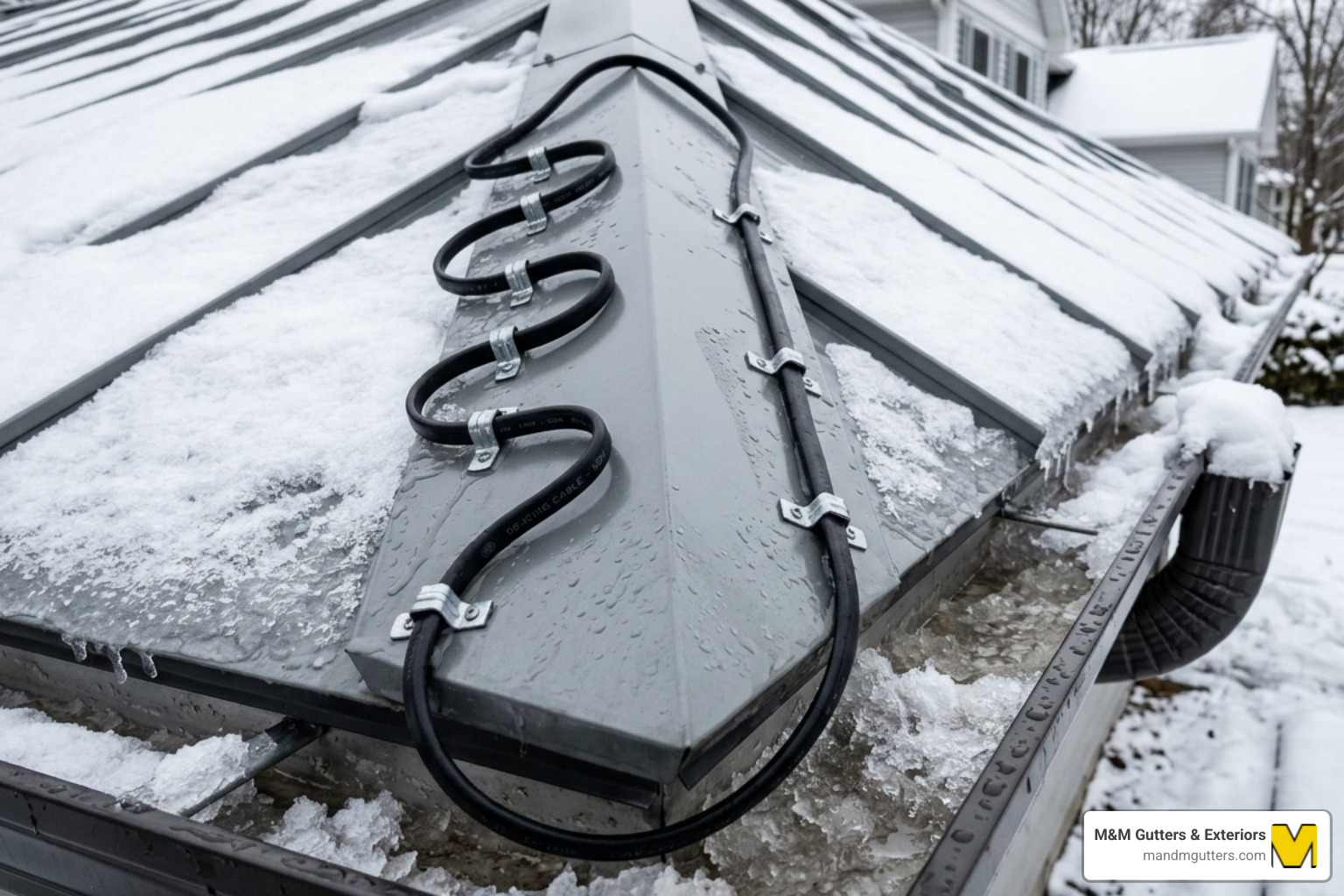
Standing Seam Roofs
These are the “cleanest” installs. Because you don’t want to poke holes in those expensive panels, we use non-penetrating seam clamps. The cable is typically run in a “zigzag” or serpentine pattern between the seams, or sometimes straight up the seam itself using specialized “HotSeam” style tracks that press the cable against the metal for maximum heat transfer.
R-Panel and Corrugated Roofs
For these profiles, the cable usually follows a serpentine pattern. We recommend a “single pass” method: the cable goes up one rib and returns down the same rib to the gutter. This keeps the cable protected from sliding snow and ensures the “valleys” of the panels stay clear. Following a Roof Heat Tape Installation Guide specifically for metal is vital here to avoid common pitfalls.
Batten and Flat Seam
Flat seam roofs, often found on mid-century modern homes in Salt Lake City, require adhesive-based mounting since there are no ribs to clamp onto. We use high-strength, weather-resistant “sticky clips” paired with industrial-grade sealants to ensure the cable stays put through a Wasatch winter.
Mounting Hardware and Clips for heat tape for metal roofs
The biggest fear homeowners have is rust or leaks caused by installation. We prevent this by using specialized Metal Roof Clips for Heat Tape → Radiant Solutions Company.
- S-5 Clamps: These are the gold standard for standing seam roofs. They grip the seam with a set-screw that doesn’t pierce the metal.
- Butyl Pads: Whenever a screw must be used (like on R-panels), we use butyl rubber pads. When the screw is tightened, the butyl creates a lifetime waterproof seal around the penetration.
- Grip Clips: These allow for quick adjustments without damaging the finish of the metal.
Proper Placement: Eaves, Valleys, and Gutters
Where you put the cable is just as important as what cable you use. If you miss a critical “drainage vein,” the whole system fails.
- The Eaves: We typically cover 12-24 inches of the roof edge. The cable should extend slightly past the drip edge to ensure water actually falls into the gutter rather than refreezing on the edge of the metal.
- The Valleys: This is where most metal roof leaks happen. We recommend running the heating cable 3-4 feet up into the valley. Valleys act as funnels for snow and ice; without heat, they become massive ice “plugs.”
- Gutters and Downspouts: A common mistake is heating the roof but leaving the gutters frozen. If the water has nowhere to go, it will just pool in the gutter and freeze into a “gutter glacier.” You must run a continuous loop of cable through the gutter and all the way down the downspout to the exit point. For a deeper dive, see our post on how to Stop The Ice Age With These Top Rain Gutter Heating Systems.
Frequently Asked Questions about Metal Roof De-Icing
Can heat tape be used with snow retention systems?
Yes, and in Utah, we often recommend it. Snow fences or “snow birds” hold the snow pack in place, preventing dangerous slides. However, this held snow can create even larger ice dams. By integrating heat tape for metal roofs with your snow retention system, you get the safety of held snow with the drainage of a heated edge. Just ensure the cable is placed so it isn’t crushed by the snow fence brackets. Review the Steps And Considerations For Installing Roof Heat Tape for more on integrated systems.
How much does a metal roof heat tape system cost?
A high-quality self-regulating cable system typically starts around $100 for the materials for a small section. For a full-service professional installation on a standard home in Northern Utah, costs vary based on the complexity of the roof.
When you look at the ROI, the math is simple. A typical ice dam leak repair can cost $2,000 to $5,000 in drywall, insulation, and roofing work. Operating the cable for a few months might add $20-$50 to your monthly utility bill—a fraction of the cost of a major repair. You can find more pricing data at Utah Heat Cable | Roof Heat Cable & Snow Melt Systems.
What are common mistakes to avoid during installation?
We’ve seen it all in our 30 years. The most frequent “oops” moments include:
- Nicked Cables: Dragging the cable over the sharp edges of metal panels. This leads to short circuits.
- Skipping Downspouts: If the water freezes in the downspout, the gutter will overflow and rip off the house.
- Using Constant Wattage: Using cheap hardware store tape that eventually melts or fails, leading to a Roof Heat Cable Installation Diy Vs Hiring A Pro Which Is Right For You debate where the “pro” usually wins on safety alone.
Conclusion
Protecting your home from the harsh winters of Salt Lake City, Summit County, and the surrounding areas requires more than just a sturdy roof—it requires a smart drainage strategy. Heat tape for metal roofs is the “insurance policy” that keeps your gutters flowing and your attic dry when the snow starts to stack up.
At M&M Gutters & Exteriors, we bring over 30 years of experience to every job. Whether you need a simple heat cable tune-up or a full Services/Roof Heat Cable Installation, we use the latest technology—including 3D HOVER visualization—to ensure your system is perfect.
Don’t wait for the first “ice-pocalypse” to hit the Wasatch Front. Contact us today for a Professional Roof Heat Cable Installation and let’s make sure your metal roof stays as beautiful and functional as the day it was installed.